Unlocking Creative Potential with Hexagonal Graph Paper KDP Interior Designs
When you first encounter a hexagonal grid, something shifts in how you perceive space on a page. Unlike the rigid perpendicularity of standard square graph paper, the six-sided cell introduces organic flow, tessellation possibilities, and a structural elegance that appeals to designers, hobbyists, educators, and publishing entrepreneurs alike. A Hexagonal Graph Paper KDP Interior brings this unique geometric framework into the world of print-on-demand publishing, offering a ready-made foundation for notebooks, sketchbooks, planners, and specialized journals that stand out in a crowded Amazon marketplace.
Creating your own interiors for Kindle Direct Publishing can feel overwhelming, especially when balancing design quality, file preparation, and the technical specifications Amazon requires. This is where a professionally crafted Hexagonal Graph Paper KDP Interior becomes invaluable. It transforms a complex design task into a straightforward process, allowing you to focus on branding, marketing, and growing your publishing catalog without getting bogged down by the intricacies of vector layout or margin calculations.
What Exactly Is a Hexagonal Graph Paper KDP Interior?
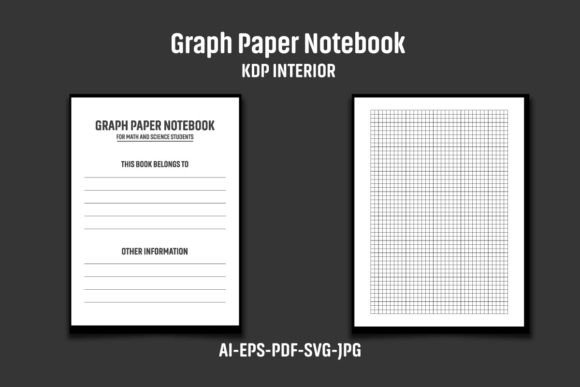
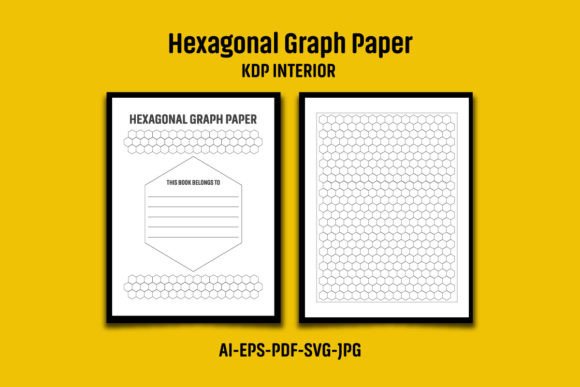
At its core, this product is a meticulously prepared set of digital files containing page after page of hexagonal grid patterns, formatted specifically for paperback book creation through Amazon's KDP platform. The interior typically spans 120 pages of consistent, high-resolution hexagon graphing sheets, delivered in multiple industry-standard file formats. Instead of spending hours aligning honeycomb patterns in design software, you receive a complete, print-ready document where every hexagon is perfectly proportioned and evenly spaced.
The dimensions speak directly to professional publishing standards. The internal pages measure 8.5 by 11 inches with bleed included, resulting in an overall document size of 8.62 by 11.25 inches. This bleed allowance is crucial—it ensures that when Amazon trims the book during production, no awkward white borders appear at the edges of your pages. The interior comes in crisp black and white at 300 DPI (dots per inch), which meets the resolution threshold for sharp, professional-looking printed output. Low-resolution interiors can appear pixelated or soft when printed, but 300 DPI guarantees that every line of every hexagon remains razor-sharp.
The Surprising Versatility of Hexagonal Grids
Why hexagons? The question deserves attention because understanding the applications reveals why a Hexagonal Graph Paper KDP Interior opens doors to niche markets that square-ruled or dot-grid notebooks cannot reach. Hexagonal graph paper serves communities and use cases that thrive on non-rectangular organization.
Gaming and Map-Making Enthusiasts
Tabletop role-playing game masters, wargamers, and strategy game designers often prefer hexagonal grids for mapping terrain, calculating movement, and designing balanced game boards. A notebook filled with hexagonal graph paper becomes a portable design studio where dungeon corridors curve organically and overland maps track overland travel with geometric precision. By publishing a journal based on this interior, you cater to a passionate, underserved audience that actively searches for hex-grid notebooks on Amazon.
Scientific and Molecular Sketching
Organic chemistry students and researchers frequently draw molecular structures, and many carbon-based compounds exhibit hexagonal ring formations. A hexagon-grid notebook allows for natural, intuitive sketching of benzene rings, graphene sheets, and complex polycyclic structures. The grid acts as both a guide and a subtle reference, making diagrams cleaner and more proportional than freehand attempts on blank or lined paper.
Quilting, Needlework, and Craft Pattern Design
Hexagonal motifs dominate certain quilting styles—most famously the grandmother's flower garden pattern—as well as cross-stitch, embroidery, and tile mosaic design. Crafters who design their own patterns need a surface that mirrors their working medium. A Hexagonal Graph Paper KDP Interior gives them exactly that: a canvas where each hexagon can represent a fabric piece, a stitch block, or a ceramic tile, enabling accurate pattern planning before any material is cut.
Bullet Journaling and Creative Note-Taking
Some individuals simply find hexagonal grids more aesthetically pleasing and less confining than traditional layouts. The angled lines encourage creative mind mapping, organic flowcharting, and visual brainstorming that breaks free from the left-to-right, top-to-bottom constraints of ruled notebook paper. Publishing a hex-grid bullet journal taps into the massive planner and journaling community that constantly seeks novel formats.
Architectural and Landscape Design Sketching
Architects and landscape designers sometimes use hexagonal grids for conceptual site planning, particularly when working with organic forms, natural terrain, or non-orthogonal building layouts. The grid provides scale and proportion reference without imposing the harsh rectilinearity that can inhibit creative flow during early design phases.
Inside the Package: File Formats and What They Mean for You
Understanding what you receive when purchasing a Hexagonal Graph Paper KDP Interior helps you make informed decisions about your publishing workflow. The typical package includes several file types, each serving a distinct purpose in the design and upload process.
- AI File (Adobe Illustrator): This native vector file contains fully editable artwork. You can open it in Adobe Illustrator to change line colors, adjust grid opacity, add your own branding elements, or modify the layout before exporting. If you want to create a version with light gray hexagons instead of black, the AI file makes this trivial.
- EPS File: The Encapsulated PostScript format is another vector standard compatible with a wide range of professional design software, including older versions of Illustrator, CorelDRAW, and Affinity Designer. The CS6 version compatibility ensures that even users with legacy software can access and edit the interior.
- PDF File: For many publishers, the PDF is the most straightforward path to upload. It preserves all formatting, embeds fonts if any exist, and maintains vector sharpness. You can upload this directly to KDP after adding your cover design, though the recommendation to customize the interior first is wise for content uniqueness.
- SVG File: Scalable Vector Graphics are web-friendly and open in numerous free and paid applications. If you do not own Adobe products, the SVG provides an accessible entry point for modifications using tools like Inkscape.
- JPG Files: Two high-resolution JPEG images serve as quick previews or can be used in software that does not handle vector formats well. However, for print purposes, vector-based formats generally produce superior results because they scale without quality loss.
All these files arrive compressed in a single ZIP archive, which you extract using built-in operating system tools or utilities like WinRAR and WinZIP. The compression simply makes downloading faster and keeps related files bundled together—once extracted, you have everything you need in a tidy folder structure.
Practical Steps Before Uploading to Amazon KDP
Amazon's content review systems flag interiors that appear identical across multiple publishers. This protects the marketplace from saturated, indistinguishable products, but it also means you must take proactive steps to ensure your notebook stands as a unique offering. The product notes emphasize that the images, text, and mockups shown in product presentations are not included—they serve only to demonstrate what the interior looks like. This distinction matters because your final published book must contain elements that differentiate it from others using the same base interior.
Add your logo or branding: A small, tasteful logo on the first page, the title page, or in the footer area transforms a generic interior into your branded product. Even a subtle text line with your publishing imprint name establishes uniqueness.
Introduce a custom title page: Using the editable AI or EPS file, insert a title page that reflects your book's specific theme. If you are creating a quilting pattern notebook, add "Hexagonal Quilt Design Journal" with complementary decorative elements. For a gaming map book, "Cartographer's Hex Atlas" sets immediate context for the buyer.
Consider subtle color variations: While the interior is black and white, you might adjust line weight or opacity to create a lighter grid that sits more gently behind handwritten notes. Some publishers create versions with slightly thicker lines for users who prefer stronger visual guides.
Add page numbers or header text: Small navigational elements increase the professional feel of your finished book and contribute to its uniqueness in Amazon's catalog.
Who Benefits Most from This Interior Product?
The audience for a Hexagonal Graph Paper KDP Interior extends beyond a single demographic. Low-content and medium-content publishers form the primary user base—individuals and small businesses building catalogs of notebooks, journals, workbooks, and sketchbooks for niche audiences. These publishers range from complete beginners testing the waters of KDP to experienced creators managing dozens or hundreds of titles across various categories.
Educators and homeschool parents represents another significant group. They might use the interior to create specialized workbooks for geometry lessons, nature journaling with tessellation studies, or creative drawing exercises that teach spatial reasoning. Instead of searching endlessly for pre-made hexagon workbooks that may not exist, they can publish exactly what they need and even offer it to other educators.
Independent artists and designers who want to branch into physical products find value here as well. An illustrator who creates pattern designs or coloring books can use the hexagonal grid as a base layer for guided drawing books, mandala construction guides, or geometric art journals. The interior becomes a component of a larger creative product.
Quality Considerations and Technical Realities
The 300 DPI resolution is standard for professional printing and ensures that when a customer receives your book, the hexagon lines appear crisp rather than jagged or blurry. Lower resolutions might look acceptable on screen but fail when transferred to paper through Amazon's print machinery. The black-and-white color scheme serves practical purposes: it keeps printing costs predictable, ensures compatibility with Amazon's printing process, and produces a clean, distraction-free surface for end users to write, draw, or design upon.
The 8.5 by 11 inch format with bleed represents one of the most popular trim sizes on KDP. It provides ample drawing space while remaining familiar to North American customers accustomed to letter-sized paper. The bleed inclusion demonstrates attention to detail—without it, the hexagonal grid might stop abruptly before the physical page edge, creating an unfinished look that could generate negative reviews.
It is important to understand that the 120 pages are not customizable in count within the provided files. If you want a different page length, you would need to add or remove pages using the editable formats. Similarly, the interior arrives as-is regarding grid size and spacing; significant modifications require vector editing skills and software that can handle the source files.
Real-World Publishing Scenarios
Consider a publisher who identifies strong search volume for "hexagon notebook chemistry" but finds only a handful of competing products. They purchase a Hexagonal Graph Paper KDP Interior, open the AI file, add a title page featuring molecular diagrams, insert a periodic table reference page, and include a brief guide to drawing common organic structures. Within a day, they have transformed a generic interior into a targeted, value-added product ready for upload. Their book now serves a specific audience with specific needs, and the branding elements protect against duplicate content flags.
Another example involves a board game designer who uses the interior to create a prototype journal for fellow designers. By adding prompts, playtest recording templates, and hex-grid map sketching areas, the published notebook becomes a specialized tool rather than a blank canvas—though the blank canvas remains available to the end user wherever needed.
Making an Informed Decision
Before purchasing any KDP interior, assess your publishing goals. Are you building a broad catalog of varied notebook types, or are you targeting a specific niche with a single, highly optimized product? Do you have access to vector editing software, or do you need an interior that can be used with minimal modification? Understanding these factors helps you evaluate whether a Hexagonal Graph Paper KDP Interior aligns with your resources and objectives.
The product delivers what it promises: a technically sound, professionally formatted hexagonal grid interior ready for customization and KDP upload. Its value lies in eliminating the time, frustration, and potential errors involved in creating such a grid from scratch—especially when ensuring proper bleed, consistent spacing, and clean vector output across 120 pages. For publishers who recognize the market potential of hexagon-based notebooks and want to move from concept to published product efficiently, the interior serves as a reliable foundation upon which to build distinctive, customer-ready books.