Exploring the Puzzle Bonanza: A Collection of Brain-Teasers and Challenges for Every Solver
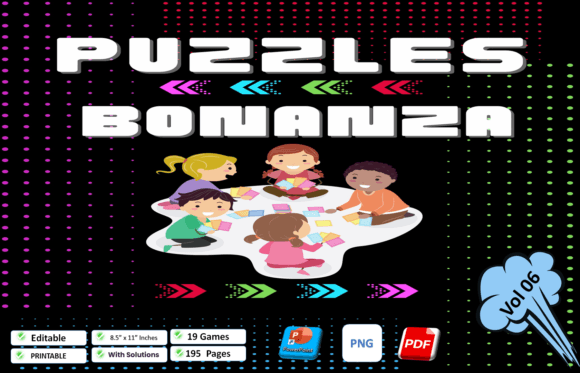
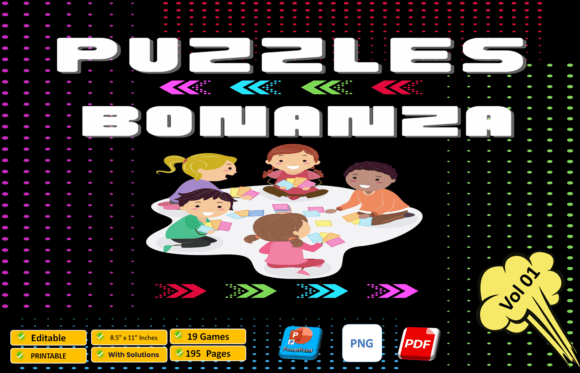
Bookstores and online marketplaces overflow with puzzle compilations, yet many fail to address a simple truth: solving should feel rewarding, not exhausting. Puzzle Bonanza: A Collection of Brain-Teasers and Challenges enters this crowded space with a specific philosophy — deliver a satisfying experience every five pages. This 195-page book packs 18 distinct puzzle types, each with solutions placed directly alongside the challenges, all set at an approachable difficulty level. But who truly benefits from this layout, and how does it compare to other puzzle resources that take different approaches to structure, complexity, and format? Let’s break down what makes this collection distinct, where it shines, and when you might consider looking elsewhere.
What Defines This Collection’s Approach
At its core, Puzzle Bonanza operates on a principle of instant gratification. Instead of tackling a page of Sudoku and flipping to the back of the book to check your work, you find answers on a nearby spread, typically within five pages. This immediate feedback loop transforms the solving experience from a delayed-reward system into a constant stream of small victories. The book also deliberately targets the “easy” end of the spectrum. For many, that label signals guilt-free entertainment, not a lack of challenge. The puzzles — ranging from Hangman and Tic Tac Toe Logic to Nurikabe, Kakurasu, and Skyscraper — test logical reasoning, pattern recognition, and basic arithmetic without requiring deep technical strategy or hours of concentration.
The variety is another defining feature. When a book offers 18 puzzle types, you aren’t locked into one mental mode. On one page you might navigate a Maze; on another, you could be deducing the hidden numbers in a Hitori grid. This keeps cognitive engagement fresh and prevents the mental fatigue that often accompanies single-genre puzzle books. The inclusion of less common puzzles like Shikaku and ABC Path also introduces solvers to mechanics they may not encounter elsewhere, broadening their puzzle vocabulary gently.
Comparing Puzzle Book Styles: Integrated vs. Separated Solutions
The decision to place answers near the puzzles isn’t just a convenience; it’s a structural choice that affects how the book is used. Many traditional puzzle compilations — especially those from large print or mensa-style collections — separate solutions entirely, often bundling them at the end. This encourages a “no peeking” mindset and suits solvers who want pure endurance tests. However, that format also adds friction. You might solve ten Sudoku grids, then spend five minutes flipping back and forth to verify results. For someone solving on a commute, during a short break, or while winding down, that friction reduces enjoyment.
Puzzle Bonanza removes that barrier. The close proximity of puzzles and solutions supports a more casual, pickup-and-play approach. Yet there is a tradeoff: some solvers find it too tempting to glance at the answer prematurely, which can diminish the feeling of accomplishment. If you’re someone who likes the discipline of hiding solutions until a dedicated review session, a traditional book with back-of-the-book answers may serve you better.
Another style worth noting is the “interactive” digital puzzle app. Apps often highlight mistakes instantly and offer hints on demand, which can feel more personalized than a static book. However, screen fatigue is real, and the tactile experience of writing in a book has its own cognitive benefits, such as improved spatial reasoning and memory. Puzzle Bonanza lands in a middle ground: it provides the convenience of quick feedback without the blue light, offering a paper-based experience that mimics the immediacy of digital tools.
Easy Difficulty as a Feature, Not a Flaw
Puzzle difficulty labels carry assumptions. “Easy” puzzles often get dismissed as child’s play or filler, but in this collection, the designation serves a deliberate purpose. Puzzle Bonanza targets adult puzzle enthusiasts who want relaxation, not frustration. The easy difficulty means most puzzles can be completed in 5–15 minutes, making them ideal for morning coffee, lunch breaks, or evening decompression. This accessibility also opens the door for novices who might be intimidated by 500-page Sudoku compendiums that escalate to diabolical levels by the midpoint.
Consider how other puzzle books handle progression. Many start easy and ramp up sharply, which assumes a learning curve and a desire to “improve.” That works well if your goal is mastery; you track your growth as you conquer harder challenges. Puzzle Bonanza, by contrast, maintains a relatively flat difficulty curve. You won’t find a spiral of escalating complexity that eventually pushes you into advanced logics like forcing chains or XYZ-Wing patterns. For solvers seeking a gentle, consistent experience, this is a strength. For those who crave the dopamine hit of cracking a three-hour puzzle, the collection will feel underwhelming.
There’s also a cognitive health angle. Occupational therapists and brain-training advocates often recommend puzzles for maintaining mental agility, and an easy-to-moderate level ensures consistent engagement without the risk of disengagement from repeated failure. That makes this book a fitting choice for older adults looking to keep their minds active without stress, or for anyone recovering from burnout who wants low-stakes mental stimulation.
Puzzle Variety and Its Impact on Cognitive Engagement
The 18 puzzle types included — Hangman, Sudoku, Warship, Range, Tic Tac Toe Logic, Nurikabe, Kakurasu, Number Place, Shikaku, Calcudoku, Skyscraper, Mazes, Math Equations, Tic Tac Toe Grids, Mine Finder, ABC Path, Hitori, One Hundred, and Four in a Row — read like a sampler menu for logic puzzles. This diversity prevents mental ruts. When you spend an hour on one puzzle type, your brain adapts to its rules and can enter a semi-automatic state. Switching between Kakurasu (which blends number clues with sum logic) and ABC Path (which requires letter placement deduction) forces your brain to reset, exercising different neural pathways.
By contrast, many puzzle books specialize in a single genre, offering deep dives into Sudoku variants or word search compilations. Those are excellent for developing genre-specific skills, but they can become monotonous. A sampler like Puzzle Bonanza works better as a gateway to discovering which puzzle types resonate with you. You might pick it up for the Sudoku, then realize Skyscraper or Hitori offers the kind of logical challenge you actually prefer. From there, you can seek out dedicated books in that genre. This exploratory value is one of the collection’s strongest use cases.
That said, breadth comes at the expense of depth. With only a few instances of each puzzle type, you won’t develop advanced strategies or reach expert-level proficiency. If your goal is to become a Calcudoku master or a Nurikabe wizard, you’ll outgrow this book quickly and need more focused resources.
Format Flexibility: Print, Editable Files, and Customization
Beyond the printed page, Puzzle Bonanza offers unusual flexibility: the package includes high-quality print-ready PDFs, PNG files, and even editable PPT source files. This makes it more than a static book — it’s a resource that educators, activity directors, or content creators can adapt. For a senior center activities coordinator, the ability to extract a few Hangman or Tic Tac Toe Logic pages and print them large-scale for a group session adds significant utility. For a teacher looking for quick warm-up exercises, the editable format allows inclusion of custom instructions or branding.
Standard puzzle books rarely offer this level of adaptation. They are typically copyrighted and locked down; you buy the physical or digital book and consume it as-is. The editable component here lowers the barrier for reuse, which can justify the purchase even if you don’t plan to solve every puzzle yourself. However, this feature might be irrelevant for the solo solver who simply wants a bound copy to pen through on the couch. For that user, the extra file access is a bonus but not a deciding factor.
The book’s 195-page count with bleed formatting suggests it was designed with professional printing in mind, which is great if you want a physical copy that looks polished. But if you’re intending to use it purely as a digital workbook on a tablet, ensure your PDF annotation app handles the large file well. The PNG files allow for easy insertion into other documents, which some other puzzle products don’t provide.
Who Is the Right Reader for This Collection?
Mapping this book to the right user comes down to three questions: What is your tolerance for frustration? How much time do you have per session? And what’s your end goal?
- You want a low-pressure mental escape. If your day already involves complex problem-solving at work, coming home to a diabolical puzzle might feel like overtime. This book offers cognitive engagement without the grind.
- You’re a puzzle novice exploring the landscape. The variety acts as a low-stakes sampler. You can find your favorites before investing in more specialized books.
- You need puzzles for group settings or educational contexts. The editable source files set this apart. Creating customized puzzle handouts from the PPT source is straightforward.
- You value immediate feedback. The integrated-solution layout means you’ll never spend time searching for an answer key. For people with limited patience or those who use puzzles as a quick transition activity, this is a major convenience.
When You Might Prefer Another Option
No single puzzle book serves everyone. If you recognize yourself in these scenarios, you may be better served by a different product category:
- You thrive on high difficulty progression. Serious sudoku solvers, for instance, often look for “hard” or “expert” labeled books with advanced techniques explained. This collection’s easy rating will feel like a warm-up that never ends.
- You want deep immersion in one puzzle type. If you’re determined to master Shikaku, a book dedicated to 200 Shikaku grids with strategic breakdowns will take you much further than a handful of easy examples.
- You dislike the temptation of nearby answers. Some solvers need physical separation to maintain the honor system. A book with all answers in the back supports that discipline more effectively.
- You’re looking for a large-print or visually simplified edition. While not explicitly described as small, puzzle books aimed at seniors often feature larger grids and high-contrast printing. If that’s a priority, check the sample pages before committing, or look for books specifically labeled as large print.
Digital puzzle apps also represent a direct alternative worth weighing. Apps like those featuring Flow Free, Sudoku.com, or puzzle subscription services provide adaptive difficulty, daily challenges, and progress tracking that a static book can’t match. If you need constant novelty or algorithms that learn your skill level, a one-time-purchase PDF book will feel limited after a few weeks. On the other hand, the book doesn’t ping notifications or require a battery, which appeals to those trying to reduce screen time.
Making the Most of the Collection
If you decide Puzzle Bonanza suits your needs, a few practical tips can enhance the experience. Print a handful of pages at a time if you want a physical solving experience without carrying the entire book; the PDF’s quality holds up well for home printing. Use the editable PPT files to create themed puzzle packs — for a road trip, pull together Mazes, Mine Finder, and Four in a Row to keep backseat passengers occupied. For skill-building, cycle through puzzle types rather than completing all instances of one before moving on; this reinforces cognitive flexibility and keeps the experience novel longer.
Also, don’t underestimate the value of the “every five pages” solution layout as a teaching tool. If you’re introducing someone to logic puzzles, that immediate feedback helps them self-correct misunderstandings before bad habits form. Many puzzle beginners give up because they complete an entire section incorrectly and can’t identify where they went wrong. The proximity of solutions shortens that feedback loop considerably.
How This Book Fits into the Larger Puzzle Landscape
The puzzle book market has split into niches: mindfulness puzzle books (with calming patterns and affirmations), competitive puzzle training manuals, themed compilations (TV show tie-ins, holiday editions), and straight-forwards like Puzzle Bonanza. This collection leans utilitarian — it’s less about aesthetics or branding, more about functional variety and ease of use. There’s no overarching storyline or gimmick; it’s simply a thoughtfully assembled grab bag of logic challenges. That straightforwardness can be refreshing if you’re overwhelmed by puzzle books that overpromise cognitive revolution or wrap themselves in heavy branding.
From an E-E-A-T perspective, the book demonstrates experience by covering a broad range of puzzle mechanics without overwhelming the user, expertise through well-constructed puzzles that follow established logic rules, authoritativeness through its offer of editable source files (implying the creator understands different use cases), and trustworthiness via transparent details about difficulty and page count. For a user evaluating options, this transparency helps set accurate expectations, which reduces the chance of disappointment.
Ultimately, Puzzle Bonanza: A Collection of Brain-Teasers and Challenges occupies a compelling middle lane. It won’t replace a dedicated expert’s training regimen, and it won’t satisfy the puzzle masochist who seeks out fiendish difficulty. But for the curious beginner, the stressed professional seeking a mental palate cleanser, or the educator needing adaptable puzzle resources, it hits a sweet spot of accessibility, variety, and format flexibility that many other puzzle books miss. By understanding its deliberate choices — easy difficulty, integrated solutions, editable files — you can decide whether those choices align with your personal puzzle philosophy, or whether you need to explore other puzzle resources that prioritize progression, depth, or a completely different solving rhythm.