Evaluating the Brain Dump Journal KDP Interior: A Practical Guide for Sellers and Creators
For self-publishers and entrepreneurs navigating the Kindle Direct Publishing (KDP) landscape, ready-made interiors can be a pivotal shortcut. A brain dump journal, designed to help users capture disorganized thoughts, ideas, and to-dos through unstructured writing, has become a popular low-content book niche. The Brain Dump Journal KDP Interior is a package intended to streamline the creation process, offering editable and print-ready files for multiple page counts. This article evaluates the product from multiple angles—its contents, ideal use cases, potential tradeoffs, and how it fits into a broader publishing strategy.
Understanding the Brain Dump Journal KDP Interior Package
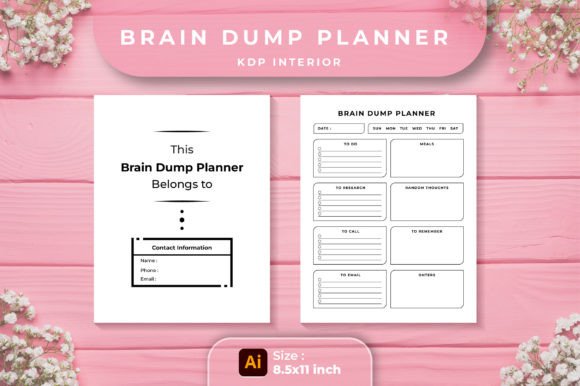
At its core, a brain dump journal interior provides the structured layout and design elements for a book’s interior pages. The specific package in focus here includes a range of file formats: 100, 110, and 120-page PDF interiors, an editable source file (AI), an EPS vector file, two SVG files, two PNG files, and two high-quality JPG files. It is sized at 8.5 x 11 inches, set at 300 DPI, and is print-ready while also allowing resizing. This bundle aims to cater to publishers who want flexibility without starting from scratch.
Who Is This Interior Designed For?
Evaluating whether this interior aligns with your goals begins with understanding the typical user profiles. The primary audience includes:
- KDP beginners who lack design skills and need a professional, compliant interior quickly.
- Experienced self-publishers scaling their low-content book portfolios with a niche that requires minimal ongoing effort.
- Freelancers or agencies creating multiple book variations for clients without reinventing the wheel each time.
- Print-on-demand sellers outside of KDP who can use the bleed-ready, resizeable files for platforms like IngramSpark or Etsy.
For each of these groups, the value proposition shifts. A beginner might prioritize ease of use and file compatibility. An established publisher might focus more on the editable source files for deep customization and branding consistency.
Strengths and Practical Benefits
The package is built around several tangible advantages:
Editable Source Files Enable Customization
The inclusion of an AI file and EPS vector file separates this from purely static PDF offerings. With these, you can adjust fonts, add branding elements, change internal prompts, or modify the layout to match an existing series. This is critical for publishers who want to avoid a generic look that might blend into a saturated market. The SVG and PNG files further support quick edits or mockup creation for listing images on Amazon or Shopify.
Multi-Format and Multi-Page Count Versatility
Receiving 100, 110, and 120-page PDFs addresses a common KDP strategy: offering slight variations to target different customer preferences or price points. A 120-page journal might be marketed as a "comprehensive" option, while a 100-page version appeals to those seeking a lighter, lower-cost alternative. Having these versions ready in 300 DPI and print-ready condition saves hours of reformatting and reduces technical errors like bleed misalignment.
Resizeable and Print-Ready Specifications
The 8.5 x 11 inch size with the ability to resize is a practical feature. While KDP’s most common trim sizes differ slightly, the resizeability ensures adaptability for notebooks, workbooks, or even A4 formats popular in some markets. The 300 DPI resolution guarantees crisp printing, a non-negotiable for customer satisfaction and avoiding negative reviews about poor quality.
Potential Tradeoffs and Considerations
No product is without its limitations, and a balanced assessment requires examining where this interior might fall short for certain users.
Niche Saturation and Differentiation
The brain dump journal niche is competitive. While the editable files help, if many sellers use the same base interior without significant modification, it becomes harder to stand out. A publisher relying solely on the provided design may find their book listing lost among identical templates. The depth of customization you can achieve—and your willingness to invest time in adapting the AI or EPS files—directly impacts market differentiation.
Learning Curve for Editable Files
The AI and EPS files assume access to Adobe Illustrator or comparable software like Affinity Designer. For someone without vector editing experience, the "editable" feature might not be immediately useful. Converting these to other formats manually could introduce compatibility issues. This contrasts with the plug-and-play nature of the PDFs, which require no design software for uploading.
File Redundancy and Storage
Having SVG, PNG, and JPG files alongside vector and PDF formats offers flexibility but may also create redundancy. A seller only planning to use PDF interiors might not need the raster files unless they are creating promotional graphics. Understanding which formats you will realistically use helps avoid unnecessary clutter and ensures you leverage the package's full value.
When the Brain Dump Journal KDP Interior Is a Strong Fit
Aligned with the strengths above, certain scenarios make this interior a practical choice:
- Rapid product launches: You want to test the brain dump niche with minimal upfront time. The print-ready PDFs let you publish within hours.
- Building a series: You plan to offer multiple variations (e.g., a minimalist edition with the downloaded interior, a color-coded edition using the AI files, and a pocket-size edition after resizing). The editable source files make this efficient.
- Educational or therapy-adjacent products: You can adapt the interior with guided prompts, affirmations, or cognitive behavioral therapy exercises. The AI file turns a basic journal into a specialized tool.
- Selling physical books directly: The high-resolution JPG and PNG files let you use the interior for mockups on your own website or in advertising, creating a cohesive brand presence.
When Alternatives Might Be More Suitable
Equally important is recognizing when another route might serve you better:
- Ultra-low budget with no customization needs: If you only want a single, static PDF interior and never plan to edit it, a less expensive PDF-only alternative might suffice. The value of this package lies in its versatility and source files.
- Highly unique, hand-drawn aesthetics: If your brand relies on custom illustrations or a very specific artistic style, a pre-made interior—even an editable one—may not align. Commissioning a designer or creating your own interior from scratch could be a better investment for brand-centric products.
- Extremely niche sizes or formats: Although resizeable, major trim size shifts can distort layout proportions. A landscape orientation or a 6x9-inch trim might require substantial rework that renders the template more of a burden than a help.
- Interactive digital journals: This interior is print-focused. If you are creating interactive PDFs for tablets with hyperlinks and form fields, the provided files will not directly support that functionality, and a specialized digital planner template would be a fit.
Practical Decision-Making Insights
To determine if this Brain Dump Journal KDP Interior matches your goals, ask a few evaluative questions:
- What is my primary publishing output? If you often create 8.5x11-inch journals and need quick, print-ready solutions, the package aligns well. If your catalog favors other sizes or formats, verify the resizing claims with your tool first.
- Do I have vector editing skills or the willingness to learn? The editable AI and EPS files unlock significant value but only if you can use them. If not, the package’s differentiator is underutilized, and you might overpay for features you ignore.
- How saturated is my target market? Conduct a quick Amazon search for brain dump journals. Are the top sellers using clean, simple interiors similar to this one? If so, plan to modify the AI file—add a unique cover, interior accent colors, or proprietary prompts—to inject your book with personality.
- What is my timeline? Immediate launch favors the PDFs. A planned, differentiated launch benefits from editing the AI or EPS files over several days. Match the file usage to your schedule.
- Do I need the raster files for marketing? The PNG and JPG files can be placed directly into social media mockups or ad designs. If you already have a mockup system, this adds convenience. If you outsource marketing, providing these files to your team can streamline the process.
Evaluating Long-Term Value
Beyond the initial purchase, consider the ongoing yield. A KDP interior like this is a digital asset. Once acquired and customized, it can generate multiple publications across different niches with minor tweaks. For instance, you could repurpose the interior layout for a brainstorming journal, a note-taking workbook, or a daily reflection diary. The AI source file acts as a template hub, reducing future design costs. Over months of publishing, the package may contribute to a higher return on investment compared to repeatedly buying single-use interiors.
However, this depends on your output frequency and market response. A static approach where you publish one book and wait rarely yields significant returns in low-content publishing. The editable nature of this product encourages iteration, which better aligns with KDP success strategies that rely on optimization and trend adaptation.
Compatibility with KDP Guidelines
A critical but often overlooked aspect is how an interior handles KDP’s technical requirements. The print-ready claim, combined with 300 DPI and bleed considerations, should reduce common rejection reasons like low-resolution images or incorrect margins. Before uploading, always preview the PDFs in Kindle Create or the KDP online previewer. Although 8.5x11 is a standard size, page count and file size can affect printing costs and royalties. Use the multiple PDFs to select the page count that balances perceived value and production costs optimally.
Summary of Suitability
The Brain Dump Journal KDP Interior offers a pragmatic set of tools for self-publishers willing to engage with its editable components. Its chief value is the combination of instant print-ready PDFs and flexible vector source files, bundled across three page counts. For those who prioritize rapid setup and gradual customization, it presents a solid foundation. For those needing a one-click, no-editing solution with zero modification, a simpler PDF-only product may suffice.
Your decision should hinge on a clear assessment: does the editing capability align with your skills and publishing strategy? If you plan to actively differentiate your journals, adapt the designs for multiple niches, or build a cohesive brand, the inclusion of AI, EPS, and raster files makes this a considered investment. If the editing software is unfamiliar or your goal is a single, low-effort entry, the package’s complexity might exceed your current needs. By weighing these factors, you can move forward with a choice that supports both your creative output and your business objectives.
Ultimately, the measure of any KDP interior lies in how it translates your time and effort into a product that resonates with readers. A brain dump journal lives or dies by its user experience: clean, spacious template that invites unfiltered thought. The files provided here can achieve that—provided you tailor them thoughtfully to the audience you aim to serve.