Evaluating the KDP Graph Paper Notebook - VOLUME 05 for Your Publishing Needs
Choosing a notebook interior template for Kindle Direct Publishing can shape how efficiently a project moves from concept to completion. The KDP Graph Paper Notebook - VOLUME 05 presents itself as a structured starting point for creators who want a reliable grid-based layout without designing every line from scratch. Understanding what this template offers, where it performs well, and where alternatives might serve you better can help you decide whether it aligns with your publishing objectives.
What the KDP Graph Paper Notebook - VOLUME 05 Actually Delivers
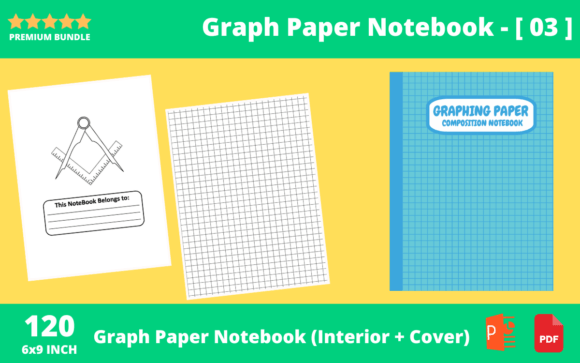
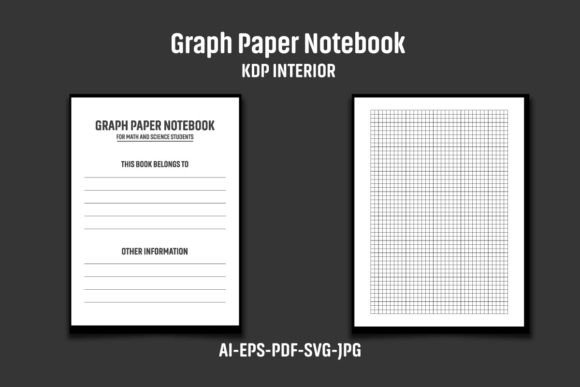
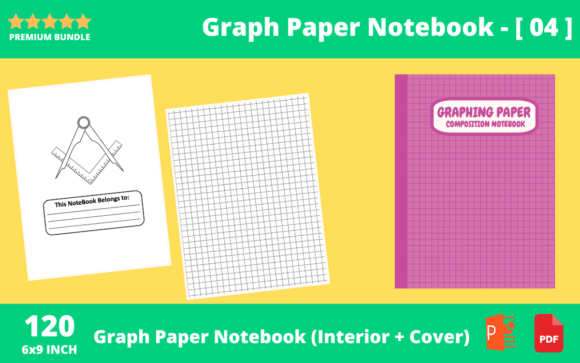
At its core, this product is a pre-formatted interior file designed specifically for creating a 6-by-9-inch graph paper notebook through Amazon's KDP platform. It arrives in both PDF and PPT formats, giving you a print-ready file and an editable version for customization. The template includes 120 pages of graph paper with consistent grid spacing intended to support precise drawing, structured note-taking, and technical sketching.
The inclusion of PowerPoint as an editable format is worth noting. While many templates offer only a fixed PDF, the PPT option lets you layer additional elements onto pages, integrate branding, or adjust certain design components before exporting a final print-ready file. This flexibility can matter if you plan to create themed workbooks or niche-specific planners rather than a generic grid notebook.
Why Creators Consider This Type of Template
Time efficiency sits near the top of most publishers' priorities. Building a 120-page graph paper interior manually requires careful attention to margin consistency, grid alignment, bleed settings, and page numbering—tasks that eat into hours better spent on cover design, market research, or content strategy. A template like KDP Graph Paper Notebook - VOLUME 05 removes that repetitive technical work.
Another reason involves print quality assurance. A properly constructed template accounts for KDP's trim and bleed requirements, reducing the risk of rejection during the upload process or complaints about cut-off grids in printed copies. For creators who have experienced the frustration of reformatting files due to margin errors, a pre-tested interior can offer peace of mind.
There is also the versatility factor. Graph paper notebooks appeal to several audiences—mathematics students, engineers, architects, bullet journal enthusiasts, game designers mapping dungeons, and crafters working on cross-stitch patterns. A single well-executed interior can be repurposed across multiple niches with different covers and titles, making it a potential workhorse in a publisher's catalog.
Trim Size and Portability
The 6-by-9-inch format remains one of the most commonly used dimensions in the KDP notebook market. It fits easily into backpacks, laptop bags, and larger purses, striking a compromise between a pocket-sized A5 and a full-sized letter format. This portability makes the resulting notebook practical for on-the-go use, whether in classrooms, fieldwork environments, or coffee shop brainstorming sessions.
Page Count Considerations
With 120 pages, the template produces a notebook substantial enough to feel worthwhile but not so thick that it becomes unwieldy or expensive to print. In the print-on-demand ecosystem, page count directly influences production cost and, by extension, your royalty margin. A 120-page notebook typically occupies a middle ground that many buyers find acceptable for the price points commonly seen on Amazon.
Material Formats and Customization Options
The dual-format delivery—PDF for immediate use and PPT for editing—accommodates both straightforward and customized publishing approaches. You can upload the PDF as-is if speed is your priority, or invest time in the PowerPoint file to create something more distinctive. This layered flexibility distinguishes the template from locked-down alternatives that offer no room for personalization.
Benefits That Translate into Practical Advantages
- Reduced technical friction: The print-ready PDF eliminates guesswork around bleeds, margins, and grid consistency across pages.
- Faster time-to-market: You can move from concept to published listing in significantly less time than designing an interior from scratch.
- Multi-niche adaptability: Graph paper's broad utility means one template can support notebook lines targeting diverse customer segments.
- Professional baseline quality: The crisp grid lines and clean layout provide a polished foundation that meets buyer expectations.
- Editable backbone: The PPT format allows addition of headers, page numbers, section dividers, or instructional prompts to tailor the notebook for specialized audiences.
Tradeoffs and Realistic Expectations
No template solves every publishing scenario, and the KDP Graph Paper Notebook - VOLUME 05 comes with inherent limitations worth acknowledging. The grid style is fixed; you cannot easily convert the 5mm or quarter-inch squares into an isometric grid or a dot-grid pattern. If your target audience prefers dot grids for bullet journaling or isometric paper for 3D sketching, this template will not accommodate them without extensive manual modification.
The 6-by-9 trim size, while popular, also excludes buyers who specifically search for larger formats like 8.5 by 11 inches for technical drawing or smaller pocket formats for quick reference. Market demand fluctuates across sizes, and committing to a single trim size means accepting the segment of buyers aligned with that preference.
Additionally, using a commercially available template means other publishers may release notebooks with identical interiors. The cover becomes the sole visual differentiator in a crowded search results page. If you aim to build a brand recognized for unique interior design, you may eventually need to invest in fully custom layouts.
Ideal Scenarios: When This Template Makes Strong Business Sense
The template fits well for first-time KDP publishers who want to test the notebook market without heavy upfront design investment. The low barrier to entry allows experimentation with different cover designs, keywords, and niche targeting while maintaining a proven interior. If a particular niche shows promise, you can later invest in more tailored interiors based on validated demand.
Educational content creators may find this resource especially useful. A math practice workbook, a physics lab journal, or a sketching book for art students benefits from consistent graph paper. The editable PPT format also enables inserting instructional prompts, formula references, or exercise instructions directly onto pages.
Volume-focused publishers managing broad catalogs can leverage this template to rapidly launch notebooks under multiple niche-specific titles. By pairing the same interior with carefully researched covers, they can cover ground across keywords like "grid paper notebook for engineers," "graph composition book for students," and "square paper pad for designers" without reinventing the interior each time.
When Alternatives Merit Serious Evaluation
Consider looking beyond this particular volume if your market research points toward a specific grid variant. Dot-grid notebooks have surged in popularity, and isometric paper serves a dedicated audience of artists and designers. Other volumes in the same template series may address these alternatives, or you might seek a separate resource better aligned with your chosen niche.
If you possess intermediate to advanced design skills in software like Adobe InDesign or Affinity Publisher, creating your own interior might yield better long-term value. Custom designs allow you to control every detail—from grid color and opacity to margin width and header style—building a truly distinctive product that competitors cannot replicate using the same template.
Budget-conscious creators planning multiple notebooks should calculate the per-template cost against the one-time effort of self-design. While individual template purchases may seem modest, costs accumulate across multiple volumes. If you envision launching ten or more notebook variations, learning the design principles once could prove more economical over time.
Making a Confident Decision
Start by clarifying who your ideal buyer is and what they expect from a graph paper notebook. Read competitor reviews on Amazon to understand what satisfies and frustrates customers in this category. Look for patterns: do buyers praise thick paper and grid clarity, or do they complain about squares being too large or margins too narrow? Use these insights to evaluate whether the template's specifications align with documented buyer preferences.
Consider the competitive landscape in your chosen niche. A highly saturated subcategory may reward distinctive interior design that stands apart visually. A less crowded niche might perform perfectly well with a clean, standard interior combined with a compelling cover and optimized listing. Your strategy should calibrate the level of interior uniqueness to the competitive dynamics you observe.
Finally, assess your own production capacity and publishing timeline. If you can move faster with a template and reinvest saved time into keyword research and cover design, the KDP Graph Paper Notebook - VOLUME 05 may accelerate your publishing pace. If you have more time than budget and enjoy the design process, allocating hours to learning interior creation could build skills that benefit multiple future projects.
Balancing Efficiency with Distinctiveness
The decision to use a pre-made template ultimately reflects a trade-off between efficiency and originality. Neither approach is inherently superior; what matters is how well the choice serves your specific publishing context, audience expectations, and creative vision. The KDP Graph Paper Notebook - VOLUME 05 provides a solid technical foundation for a common and enduring notebook format. Whether that foundation supports a one-off experiment or anchors an expanding product line depends on how thoughtfully you build upon it with market-informed cover design, accurate metadata, and a clear understanding of customer needs within the graph paper notebook category.