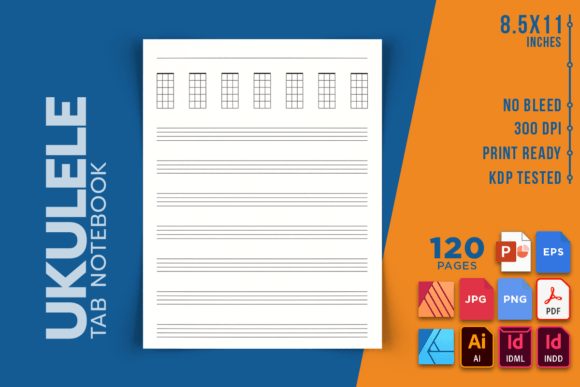
Ukulele Tab Notebook Interior for Effortless KDP Publishing
For anyone who has ever tried to self-publish a ukulele tab book on Amazon KDP, the print-ready interior can be the trickiest piece of the puzzle. The Ukulele Tab Notebook solves that headache instantly. It’s a fully formatted, tested KDP interior template—120 pages of clean, no-bleed ukulele tablature sheets inside an 8.5 x 11 inch trim size. You supply the song, lesson, or practice content; the file handles the layout so you stay focused on the music. Whether you’re a music teacher building a wireless method book, a songwriter compiling daily warm-ups, or a creative entrepreneur launching a branded journal, this interior gives you a professional backbone.
What Makes This Ukulele Tab Notebook Different
At first glance, a tab notebook interior might seem like a simple grid of lines and numbers. But subtle design decisions make the difference between a book musicians love using and one that dismisses them with its poor formatting. The Ukulele Tab Notebook interior is built with practical music writing in mind. Each page features evenly spaced four-line tab staves—enough room for standard tuning notation, rhythmic markings, and chord box sketches without feeling cramped. The lines are dark enough to reproduce crisply on home printers or POD presses but light enough to write over with pencil or pen without visual clutter. There’s no restrictive header or footer crowding the page, just generous margins that let the content breathe and keep fingers from running into a perfect bind gutter.
The 8.5 x 11 inch format was chosen deliberately. It matches standard US letter dimensions, which most print-on-demand services handle natively. That alone removes a common KDP reject trigger. At 300 DPI, every line and subtle dot prints sharp, so even a low-contrast pencil scan will retain its legibility. And because it’s a no-bleed design, you never have to puzzle over additional bleed margins or worry about ghostly cut-off marks during trimming. All of this is formatted inside file types that open in almost any graphic or layout software: INDD, IDML, AI, PDF, PNG, JPEG, EPS, AFDESIGN, AFPUB, and even PPTX. If you prefer Adobe InDesign, great. If you use Affinity Publisher or just need a high-resolution PDF to drop straight into KDP, it’s ready to go. The included editable source files mean you can add your own page numbers, tweak the header area, or slot in a branded lesson section without rebuilding the wheel.
Visual Calm and Practical Personality
The design personality of this interior is intentionally understated—almost architectural. It doesn’t scream for attention with fancy borders or quirky icons. Instead, it communicates competence and clarity. That kind of quiet sophistication works especially well for educational materials, where a flashy layout can distract from the task at hand. For a ukulele instructor selling a technique workbook, that means students focus on finger positions and strumming patterns, not on competing visual noise. A small business selling personalized ukulele gifts can pair this interior with a fun cover and have a professional album-like feel inside, where tab pages look more like a musician’s studio notebook than a school exercise book.
There’s also a subtle rhythmic quality to the repeating tab lines. When you flip through a finished book, the clean grid provides a steady visual pulse that makes the product feel cohesive. That consistency builds a quiet trust, which is something every brand—from solo indie publishers to music accessory shops—needs. If you’ve ever picked up a self-published music book and immediately noticed misaligned staves or wonky spacing, you know how fast that erodes confidence. This interior eliminates that guesswork.
Where This Tab Notebook Interior Shines
The obvious home for the Ukulele Tab Notebook is a KDP low-content book. But it’s far more versatile than just a blank tab journal. Here are a few realistic ways creative professionals and hobbyists are using it.
Ukulele Method Books and Daily Practice Logs
Teachers and instructional designers can drop their lesson text, chord diagrams, and practice prompts directly onto the pre-built pages. Because the source files are editable, you can layer appendices, reference chords at the back, or include a blank staff section for standard notation alongside the tab. The result is a bespoke method book without starting from scratch. The 120-page count gives enough room for a full 12-week course with note-taking sections, while not overwhelming beginners. For a daily practice journal, each page can hold a session’s exercises, a scale run, and a short reflection—exactly the kind of structured but flexible format practice-habit researchers recommend.
Songbooks and Community Song Circles
Ukulele clubs and campfire groups love shared songbooks. Instead of messy binder collections of photocopied tabs, a single compiled spiral-bound book with consistent formatting makes a night of strumming flow effortlessly. Because the interior is no-bleed and 8.5x11, it can be printed at a local office supply store and comb-bound with clear covers. You can also brand each spread lightly with a group logo or event name, using the editable AI or INDD files to add that touch without breaking the tab grid’s rhythm. This interior becomes a blank canvas for communal music-making.
Personalized Gifts and Merch
For entrepreneurs running Etsy stores or Shopify shops, customizable ukulele tab notebooks are a growing niche. Pair this interior with a painted watercolor cover, a custom name embossing mockup, and a sweet tagline like “Write every chord that moves you.” The interior’s clean tab lines keep the product feeling high-end, while the editable files let you swap out a single page to insert a thank-you note or brand story. That attention to detail makes $15 journals feel like premium merchandise. The tiny detail that often seals the deal: the tab lines are crisp but not imposing, so when gift recipients actually write in them, the notebook becomes a usable keepsake—not something that gathers dust.
Design and Production Details That Affect Your Bottom Line
Understanding a few behind-the-scenes specs helps you avoid production hiccups. The 120-page count is intentional: it’s thick enough to have a spine that can carry a title when printed through KDP, yet thin enough to keep printing costs down, widening your royalty margin. No-bleed pages mean you don’t have to extend any artwork to the edge, which is a relief if you’re not a layout pro. The PDF is high-quality and KDP-tested, so you can upload it directly without messing with margins or worrying about printer rejections because of insufficient trim area. For those who want more customization, the availability of AI, EPS, and AFDESIGN files means you can open the interior in Illustrator or Affinity Designer and tweak stroke weights, add vertical dividers for special sections, or adjust the line spacing for younger players or visually impaired users.
A note on the 300 DPI resolution: this is significant for both offset and digital printing. At 300 DPI, the thin tab lines won't break up or appear fuzzy, even on older laser printers. If you’ve ever seen a tab book where the numbers look fuzzy around the edges, you know how quickly that degrades the reading experience—and can lead to negative reviews. Sharp, high-contrast lines encourage repeated use and project a sense of reliability.
How the Ukulele Tab Notebook Influences Reader Engagement
Visual rhythm and readability directly affect how long a musician stays on a page. If a tab page feels dense or irregular, the brain tires quickly, and practice sessions shorten. This interior’s consistent spacing—what you might call a considered vertical rhythm—allows the eye to glide from one measure to the next. It also subtly reinforces the concept of musical time. Even before the first note is written, the page has an orderly structure that suggests progression. That psychological undercurrent can make a student feel more accomplished, more compelled to fill in the lines. Over the course of a full book, that small nudge adds up to better practice habits and, from a publisher’s standpoint, a product that buyers actually finish and eventually re-purchase.
For brands, that’s a loyalty loop hiding in plain sight. A well-designed tab interior becomes a silent ambassador. When a satisfied customer posts a photo of their filled notebook on social media, the clean, professional layout reflects positively on the brand that published it. It says, “This creator cared enough to get the fundamentals right.” That kind of subtle endorsement is more valuable than any headline.
Practical Tips for Making the Most of This Interior
Before you upload the final file to KDP, consider a few quick wins that publishers often overlook. First, open the editable AI or INDD file and add a faint, right-aligned page number if your book will have a table of contents or cross-referenced lessons. The current design keeps the page area open, but a discreet gray number at the outer bottom corner doesn’t disturb the tab field and adds enormous usability. Next, if you plan to use the notebook for a left-hand player’s edition, simply flip the staves horizontally in the source file—the lines are direction-agnostic. The no-bleed layout means you won’t even need to adjust margins afterward.
Test print a single signature at home on the paper type you’d recommend for the final product. This interior’s 300 DPI lines look sharp on both standard 20lb bond and cream-tinted 24lb stock, but the latter adds a warmer, vintage feel that pairs nicely with classic ukulele aesthetics. If you’re producing a high-volume run, the file works equally well with offset printers who require CMYK-ready EPS or PDF. Always check the final exported PDF’s page count exactly matches 120; the interior file comes pre-counted, so you don’t accidentally upload a file with only 119 pages, which can cause KDP ordering anomalies.
Choosing the Right Cover to Complement the Interior
This product is interior-only, meaning you’ll need to create your own cover. That’s actually a creative advantage. A bold, matte cover with a stylized ukulele silhouette creates a modern, boutique look. Photographic covers with tropical or coffeehouse vibes tap into the ukulele’s sunny personality. For journals aimed at songwriters, a minimalist typographic cover works well because it mirrors the interior’s functional beauty. If you’re publishing multiple journals under a single brand, maintaining a consistent cover template while rotating colors builds a recognizable series on Amazon. Just remember to calculate the spine width based on KDP’s formula for 120 pages on your chosen paper stock—typically under 0.25 inches—so your cover text falls dead center.
Who Needs This Ukulele Tab Notebook Interior Today
In short, anyone who values time, consistency, and a polished final product. Music teachers who want to stop handwriting the same tabs semester after semester. Indie publishers testing the ukulele niche without hiring a layout designer. Creative crafters who sell cute blank music journals on Etsy and want to elevate their listings. Aspiring songwriters who want to organize their original compositions in a clean format before copyright submission. And small print shop owners who need a drop-in tab page template for client custom book projects. The fact that it’s already formatted, tested, and provided in multiple editable formats removes the technical friction and lets the idea come out faster.
Because the world doesn’t need more clunky tab books. What it does need is a simple, beautiful, musician-friendly place to capture the chords that become songs. The Ukulele Tab Notebook interior is exactly that—a quiet, professional blank stage waiting for the strums.