Inside Sudoku Easy: A Clean, Market-Ready Puzzle Interior for Self-Publishers
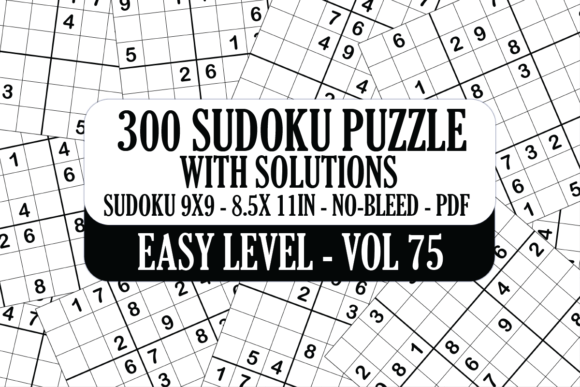
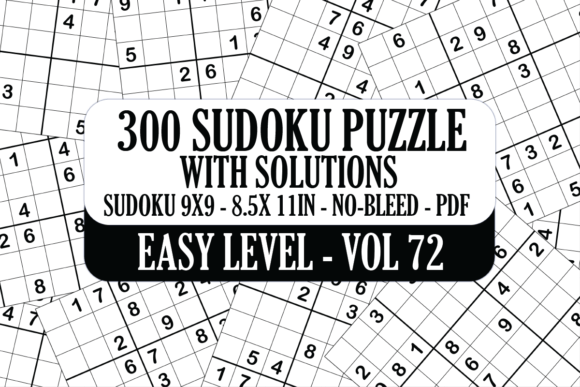
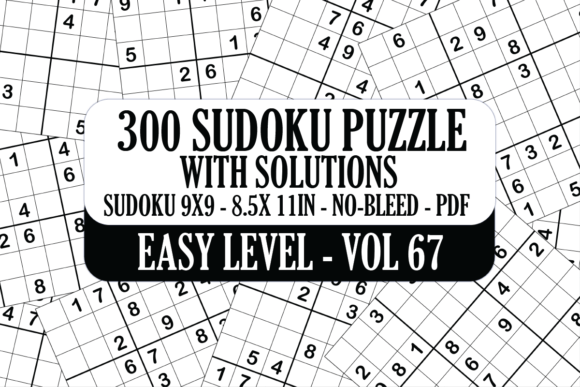
Some creative assets promise flexibility but deliver a tangle of formatting headaches. Others look polished in preview but crumble the moment you upload them to a print-on-demand platform. Sudoku Easy belongs to neither category. This is a deliberately crafted KDP interior file—a single PDF with 300 easy Sudoku puzzles, solutions, and a layout that respects the quiet logic of the grid. For anyone who has wrestled with margin alignment, bleed settings, or inconsistent numbering, this ready-to-upload design removes friction at every turn. It arrives as a 75-page document, sized at 8.5 by 11 inches, with no bleed required. Six puzzles sit on each puzzle page, twelve solutions fill each answer page. Everything is newly generated content, not rebundled filler from free online generators.
The personality of Sudoku Easy lives in its restraint. The gridlines are crisp but not harsh. Numbers are set at a comfortable weight—clean enough for quick scanning, substantial enough to avoid strain during longer solving sessions. There is no decorative clutter, no overbearing branding, no whimsical illustrations that distract from the mental quiet that Sudoku demands. The visual character is best described as functional elegance. This is a premium font of puzzle design, not in the typographic sense, but in the way every element—number sizing, cell proportions, page margins—feels measured and intentional. When a solver sits down with a puzzle from this book, the eye moves naturally across the grid. Nothing competes for attention.
Why the Interior Design Matters More Than You Think
Puzzle book buyers may not articulate design critique, but they feel it. A poorly kerned digit, an overcrowded answer section, a grid that bleeds too close to the binding edge—these micro-frictions accumulate into a subtle sense of amateurism. Sudoku Easy avoids this completely. The 6-per-page layout strikes a balance that many self-published puzzle books miss. Too few puzzles per page and the book feels sparse, padded. Too many and the solving experience becomes cramped, with pencil tips fighting for space. Six puzzles per page is a proven sweet spot for adult solvers who want density without claustrophobia.
The solution pages follow a similar logic. Twelve solutions per page means solvers can check answers without flipping through endless back matter. The numbers in the solution grids are clear, set slightly smaller than the puzzle numbers but still effortlessly legible. This visual hierarchy—primary puzzles commanding the main pages, solutions receding into reference territory—creates a reading rhythm that feels natural. There is an almost editorial design quality to the flow, as if the book understands that solving and checking are two distinct cognitive modes.
Where Sudoku Easy Fits in Your Creative and Commercial Projects
The most obvious home for this interior is a self-published puzzle book on Amazon KDP. Format the cover, pair it with this interior, and you have a sellable product in hours rather than weeks. But the applications extend further. Coaches and wellness practitioners often use puzzle books as low-cost lead magnets at retreats or workshops. A branded Sudoku book—your logo on the cover, the clean interior doing its quiet work—can become a tactile reminder of a mindfulness session or cognitive health program. Boutique stationery brands, Etsy shop owners, and craft fair vendors can print and bind the interior as part of a curated gift set alongside pens, teas, or candle tins.
For brand identity projects in niches like senior care, travel accessories, or slow-living lifestyle products, a Sudoku book signals thoughtfulness. It tells the customer: we understand stillness. We value unplugged moments. The clean, unpretentious aesthetic of Sudoku Easy aligns naturally with modern typography trends that favor clarity over flourish. The number forms used throughout the interior carry a quiet, sans serif sensibility—unadorned, direct, trustworthy. There is no script font whimsy or handwritten font casualness here; the tone is closer to what you would expect from a well-designed transit map or a minimalist Swiss poster. That neutrality is a strategic strength. It allows your cover design and branding to set the entire mood without the interior competing for thematic control.
Readability, Visual Hierarchy, and the Subtle Art of Keeping Attention
Easy Sudoku occupies a specific psychological space. These are not the puzzles that make solvers sweat. They are the ones people reach for during morning coffee, on a lunch break, or as a wind-down ritual before sleep. The design must honor that gentleness. Grids that feel too severe or numbers that appear too small can subtly escalate cognitive load, defeating the purpose of an easy puzzle. Sudoku Easy maintains generous white space between individual puzzles, so each grid feels like its own contained moment. The eye does not blur across four columns of undifferentiated squares.
This attention to visual hierarchy also affects how the book performs commercially. Reviews often mention "easy to read" or "nicely spaced" more readily than they mention puzzle quality. The interior becomes an unspoken collaborator in the customer experience. From a brand perception standpoint, that collaborator either reinforces a publisher's professionalism or quietly undermines it. A number that prints inconsistently, a margin that floats too close to the trim line—these are the invisible reasons a product receives a three-star rating instead of a five. The consistency baked into this interior PDF removes those variables.
Why Easy Puzzles Are a Smarter Market Entry Point
Many new KDP publishers chase difficulty, assuming harder puzzles command higher perceived value. In practice, easy puzzles sell to a broader and more consistent audience. Travelers, seniors, beginners, and casual solvers all gravitate toward easy Sudoku collections. These buyers are less likely to abandon a book out of frustration and more likely to purchase multiple volumes as gifts. By starting with an easy-level interior, you position your product in the path of habitual, repeat purchasers—exactly the audience that builds a sustainable publishing catalog.
The newly generated puzzle content in this interior also addresses a quiet but persistent problem in the Sudoku niche. Many free puzzle generators produce grids that solve correctly but lack aesthetic variety. Some feel algorithmically sterile. Others cluster numbers in visually uninteresting patterns. The puzzles in Sudoku Easy were generated fresh, with attention to distribution and solving flow. For solvers, this means a more natural, less mechanical experience. For publishers, it means a product that feels premium without the premium production cost.
Practical Guidance for Choosing and Using This KDP Interior
Before uploading, ask yourself what role this book plays in your broader publishing strategy. If you are testing the Sudoku market for the first time, the 300-puzzle format offers enough content to feel substantial while keeping page count manageable. At 75 pages, the spine remains slim—ideal for a paperback that sits flat during solving. The 8.5 by 11-inch dimensions, combined with no-bleed specifications, mean your cover designer has clean edges to work with and your interior requires no trimming gymnastics.
Font pairing enters the conversation when you design the cover. Since the interior leans toward a clean, sans serif aesthetic, a cover that uses a complementary display font or a warm serif font can create an appealing contrast. Think of a bold, friendly title typeface paired with the restrained grid numbers inside. That interplay of typography personalities—expressive outside, disciplined inside—often performs well in lifestyle and gift categories. Avoid overly decorative script or heavily distressed handwritten styles for the cover if your target audience skews older; clarity at thumbnail size remains a practical concern for Amazon browsing.
Test a printed proof before ordering inventory or going live. Even with a no-bleed file, paper stock, ink density, and printer calibration can subtly affect how gridlines appear. Flip through the solution pages first—many creators overlook these, but they are the most frequently referenced section for solvers who want quick answer checks. Verify that numbers print cleanly without breaking, that grayscale values remain consistent, and that the binding does not swallow inner margins. A single thorough proofing session catches issues that on-screen previews often hide.
Commercial Licensing and the Freedom to Scale
Most KDP interiors come with clear licensing terms, but it is worth understanding what you can do beyond a single book listing. With newly generated puzzle content, you are typically free to publish the interior as a standalone product, bundle it with other difficulty levels, or use it as a bonus inside a larger activity book. This flexibility supports a range of commercial models. A publisher might release the easy volume first, gauge sales velocity, then follow with medium and hard editions using a consistent design language. A lifestyle brand might repurpose selected puzzles for social media graphics—posting a daily puzzle as an engagement driver while linking to the full book.
For logo design studios or branding agencies with clients in publishing, this interior can serve as a white-label base. Apply the client's color palette to the cover, include their wordmark, and suddenly you have produced a custom-branded puzzle book without commissioning original puzzle generation or interior layout from scratch. The time saving is significant, and the result feels bespoke rather than templated. Just confirm that your license permits rebranding and resale under a different imprint name—most KDP-ready interiors are designed with exactly this scenario in mind.
What Makes a Puzzle Interior Feel Professional
Professionalism in puzzle design is cumulative. It is the alignment of grid borders across facing pages. The consistent weight of every single numeral. The breathing room around each puzzle. The logical grouping of solutions. Sudoku Easy demonstrates all of these, and that coherence translates directly into reader trust. Trust, in turn, translates into reviews, returns, and word-of-mouth recommendations. A solvers who feels respected by the page layout is far more likely to remember the publisher's name when searching for their next puzzle fix.
If you have experimented with DIY interiors—pasting screenshots from puzzle apps into a Word document, wrestling with Excel-based grid generators—you already know how quickly small inconsistencies multiply. One puzzle renders perfectly; the next shifts by two pixels. Solution fonts switch unexpectedly. Margins wander. The quiet agony of fixing these issues often exceeds the effort of creating the puzzles themselves. A validated, upload-ready design asset like this PDF eliminates that entire feedback loop. Download, upload, order a proof, publish. The straightforwardness of that workflow is, for many small business owners, the most valuable feature of all.
A Quiet Canvas for Focused Minds
In a content landscape saturated with noise, easy Sudoku puzzles offer something increasingly rare: a single-focus activity. The solver enters the grid, works through the logic, and emerges a few minutes later with a small, satisfying sense of completion. The interior design either supports that journey or distracts from it. Sudoku Easy chooses to support it completely, stepping back so the puzzle can step forward. That restraint—practical, hard-won, and market-tested—is what makes this interior more than just a file. It is a foundation for publishing, branding, and creating products that people reach for again and again.
Whether you are a first-time KDP publisher curious about the puzzle niche, a designer crafting a thoughtful gift line, or a business owner exploring low-cost branded merchandise, starting with a professionally laid-out interior changes the rhythm of the entire project. The puzzles are ready. The solutions are clear. The pages are balanced. All that remains is the cover, the category selection, and the click to publish. For creative professionals who value both quality and efficiency, that is a very good place to begin.