Wedding Word Search Puzzles: A Crowd-Pleasing Activity and a Smart KDP Publication
Picture a sun-drenched garden reception. Cocktails are flowing, but a few guests are waiting for the bridal party to finish photos. Kids are getting restless. Instead of idle chitchat, a beautifully designed wedding word search puzzle lands on each table. Laughter starts as people race to find “bouquet,” “first dance,” and the couple’s names. This is the kind of real-world magic that a simple word search can deliver, and it’s exactly why wedding word search puzzles have become a staple for both event planners and creative entrepreneurs on Amazon KDP.
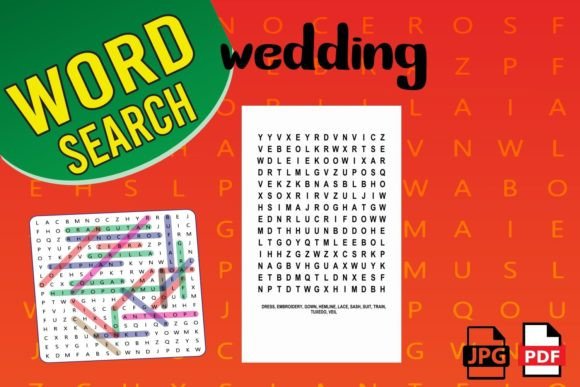
At its heart, a wedding word search puzzle is a themed grid of letters hiding marriage-related words. It can stand alone as a single-page activity or form part of a larger activity book interior. For KDP sellers, a print-ready product often includes 3 PDF pages – typically the puzzle grid, a solution page, and a decorative title or instruction sheet – along with high-quality JPG files and a large 8.5 x 11 inch trim size that buyers easily recognize as standard for activity books. But the real story isn’t the file format; it’s the sheer versatility of this low-content book interior across a range of wedding moments.
Where Wedding Word Search Puzzles Come Alive
Most people first encounter a wedding word search at a bridal shower. Here, it acts as both an icebreaker and a gentle competition. I’ve seen hosts place one at each seat along with a pencil, turning the first twenty minutes into a quiet hum of concentration until someone shouts “Bingo!” – or rather, “I found them all.” Because the word list can be personalized, bridesmaids often include inside jokes, the proposal story, or the honeymoon destination. That custom touch transforms a generic game into a cherished keepsake.
At the wedding reception, the puzzle serves a different purpose. Placed on tables during cocktail hour or between courses, it keeps guests engaged without overwhelming the atmosphere. Unlike loud group games, a word search allows introverted guests to participate comfortably. I’ve watched elderly relatives bond with a young cousin over finding “something borrowed,” bridging generations through a shared, low-pressure task. Some couples even slip the puzzle into their welcome bags for destination weddings, giving guests a memento that hints at the local flavor – words like “safari,” “vineyard,” or “lighthouse” based on the venue.
Beyond the in-person event, wedding word search puzzles have found a home in virtual and hybrid celebrations. When a live stream wedding kept guests apart, a digitally shared printable puzzle gave everyone a common focal point. Screenshot races replaced table-to-table competition. This use case exploded during recent years and remains popular because it adds a tactile, unplugged element even when people are miles apart.
Then there’s the post-wedding reality: thank-you cards and anniversary parties. A mini word search tucked into a thank-you note featuring words from the wedding day creates a sweet callback. Years later, couples have used the same puzzle template for vow renewal invitations, swapping out the word list while keeping the original design. The lifecycle of a single puzzle design can stretch far beyond a single Saturday.
Who Really Benefits from This Kind of Puzzle?
The obvious audience is brides, grooms, and their families looking for DIY entertainment. But wedding professionals see the value too. Wedding planners and coordinators keep a folder of ready-to-print puzzles they can brand with the couple’s date and color scheme. It’s a low-cost value-add that sets them apart in a competitive market. I recently spoke with a planner who included a custom word search in every client’s “emergency kit” basket; it became her signature touch and a conversation starter among vendors.
Stationery designers have discovered that offering a digital wedding activity bundle increases their average order value. Instead of just selling invitations, they provide a package that includes a matching word search, a crossword, and a wedding maze. The puzzle becomes part of a cohesive aesthetic, with fonts and motifs carrying through every piece. For print-on-demand authors, specifically those using KDP, the 8.5 x 11 inch puzzle page is a foundational element. A seller can build an entire low-content book around a single wedding word search by adding pages for coloring, journaling, or other puzzle types. The 3 PDF pages format (puzzle, solution, title) allows them to create a minimalist yet complete book that appeals to customers seeking a quick, affordable activity book for a bachelorette party or wedding shower.
Even non-wedding industries borrow the concept. A bridal shop might hand out a custom puzzle during a trunk show. A florist could include a rose-themed word search with every wedding consultation packet. The puzzle acts as branded, gentle marketing – a keepsake that keeps the business top of mind without a hard sell.
Designing for Real-World Enjoyment, Not Just Print
An effective wedding word search puzzle isn’t just about stuffing words into a grid. Several practical considerations make the difference between a puzzle people actually finish and one they fold up and toss. Word list curation is everything. A balance between familiar wedding terms (“vows,” “ring,” “honeymoon”) and personal details (“Maui,” “golden retriever,” “Grandma Elsie”) keeps the challenge fresh. Too many obscure words frustrate users; too few make it trivial. I’ve found that a list of 15–20 words suits most adult players, while a kids’ version should stick to 8–10 with larger font grids.
Grid density and layout matter especially when you’re creating a print-ready PDF for KDP. Because the file is set as a large 8.5 x 11 inch page, you have room for generous spacing. A cramped, tightly packed grid will feel stressful under dim reception lighting. Include clear directional clues if words can go backwards or diagonally; many puzzle solvers abandon a search simply because they don’t know the rules. The solution page should be separate, clearly marked, and formatted as a high-quality image – which is where the provided JPG files shine for sellers who want to insert the answer key without reformatting.
Another nuance: font and contrast. A whimsical script might look romantic but can be illegible for older guests. Stick with clean, sans-serif letters for the puzzle grid itself, reserving decorative typography for the title or header. If the puzzle is part of a KDP activity book interior, test-print at home on standard paper. What looks crisp on screen can become muddy after Amazon’s printing process, so the “high-quality print ready” promise matters enormously; it means the file is already sized correctly with margins and bleed considered.
Also think about the physical setting. If puzzles will be used at outdoor tables, consider making them slightly larger than a half-sheet to prevent wind theft. A full 8.5 x 11 inch single-page puzzle can be clipped to a mini clipboard for a rustic-chic effect. These small touches transform the puzzle from a paper scrap into part of the décor.
Turning a Single Puzzle into a KDP Publishing Opportunity
For entrepreneurs, the 3-page structure – puzzle, solution, cover/interior page – is a launchpad, not a limitation. Savvy KDP sellers often combine multiple word search puzzles with different themes into a single wedding activity book. One page might focus on “bridal party characters,” another on “honeymoon destinations,” a third on “something old, new, borrowed, blue.” The large trim size allows each puzzle to feel like a full-sized activity, and presenting the book as a bridal shower game collection instantly clarifies its value for the buyer.
The JPG files are particularly useful for creating listings. You can use them to build an eye-catching “Look Inside” preview that shows a partially solved puzzle, the crisp solution page, and the clean layout. Customers browsing KDP for a last-minute bridal shower game want to see exactly what they’re getting. A high-resolution image of the puzzle reassures them that it’s not a pixelated copy-paste job.
One overlooked advantage is the ability to offer a printable version outside of KDP. With the same PDF and JPG files, a seller can list the wedding word search as a digital download on Etsy or their own site. The same assets work across different marketplace rules. The 8.5 x 11 size is the sweet spot because it matches standard home printers; buyers don’t need to resize or trim, which reduces complaints and returns. I’ve observed that listings mentioning “large 8.5 x 11 inch – print at home easily” in their description convert better because they eliminate a common friction point.
Strengths You Can Count On, and a Few Limitations
The beauty of a wedding word search puzzle is its universality. Almost everyone knows how to do a word search, so there’s zero learning curve. It’s quiet, doesn’t require a digital device, and works for ages 6 to 96. From a KDP perspective, it’s an evergreen, low-content product that can be created quickly and scaled. Seasonal variations – spring weddings, winter wonderland, beach nuptials – give you multiple sub-niches without reinventing the wheel.
Yet, there are limitations worth acknowledging. A word search is a solitary or small-group activity; it won’t replace the energy of a high-octane group game like the shoe game. In large crowds where mingling is the priority, a puzzle left on a table might go completely unnoticed unless it’s part of a coordinated effort. And while personalization is a huge selling point, a generic puzzle that simply lists “ring, cake, dress” can feel impersonal. For KDP books, you can’t truly customize every copy for each buyer, so you must strike a balance by including sections where users can fill in their own couple-specific words, or you can offer different interior options for popular themes.
Another consideration: quality control in self-publishing. A puzzle with spelling errors or missing solutions damages credibility. If you’re assembling a KDP activity book, double- and triple-check the word placement. Use a grid generator, but always manually verify that every listed word actually appears in the puzzle. The high-quality print ready PDF should be tested on both a laser and inkjet printer to ensure no faint lines. A customer receiving a poorly printed word search during their wedding week won’t be forgiving.
Finally, think about the post-event experience. Many people keep their completed wedding puzzle as a memory; some even frame the solved grid alongside a photo of the couple. That emotional weight means the design should feel worthy of keeping. Avoid cheesy clip art. Instead, opt for elegant borders, subtle floral motifs, or minimalist typography. A puzzle that feels like a premium product elevates the entire occasion, while a cheap-looking one ends up in the recycling bin.
In the end, wedding word search puzzles bridge a delightful gap between entertainment and personal expression. Whether you’re a bride crafting table activities, a planner building a toolkit, or a KDP publisher designing an activity book interior, the same core product serves vastly different needs. The 3-page PDF format, the larg 8.5 x 11 inch layout, and the flexibility of both digital and print delivery give you a template that adapts to every wedding style. It’s a small, thoughtful element that often becomes one of the most talked-about details of the day, and in the world of low-content publishing, that kind of emotional connection is pure gold.