The Art of Solving Sudoku Medium Puzzles: Balancing Challenge and Accessibility
Sudoku medium puzzles occupy a fascinating middle ground in the puzzle-solving world, offering an experience that transcends the simplicity of easy grids without plunging into the intimidating complexity of hard or expert levels. For those who have moved past the introductory stages of number placement, these intermediate challenges provide exactly the right amount of resistance to keep the mind engaged and growing. Understanding what makes a Sudoku Medium puzzle tick involves appreciating the delicate architecture of logical reasoning, pattern recognition, and strategic thinking that defines this beloved pastime.
Understanding the Cognitive Sweet Spot of Medium Difficulty
The human brain thrives on challenges that are neither too trivial nor impossibly difficult. When a puzzle is too easy, the mind wanders; when too hard, frustration sets in. Sudoku Medium puzzles hit the cognitive sweet spot where dopamine release accompanies each small victory, reinforcing continued engagement. Researchers studying puzzle-solving behaviors have noted that intermediate-level Sudoku activates regions of the prefrontal cortex associated with working memory and decision-making without triggering the stress responses that overly difficult problems can induce.
This balance makes medium-level Sudoku particularly useful for maintaining mental acuity over time. Regular engagement with these puzzles has been linked to improved concentration spans, enhanced logical deduction abilities, and even better performance on tasks requiring sustained attention. The beauty lies in the fact that each Sudoku Medium grid presents a unique pathway to completion, never relying on guesswork but always demanding genuine deductive reasoning.
The Structural Anatomy of an Intermediate Grid
What separates a medium puzzle from its easier counterparts is the number and distribution of given digits, but the distinction goes much deeper than simple clue counts. In easy puzzles, straightforward scanning techniques and single-candidate identification often suffice. A Sudoku Medium puzzle, however, typically requires solvers to employ techniques such as hidden singles, naked pairs, and occasionally pointing pairs to make progress.
Puzzle designers craft these intermediate grids with intentionality, placing given numbers in patterns that force solvers to look beyond the obvious. The initial scan of rows, columns, and 3x3 boxes will reveal some immediate placements, but soon the solver encounters moments where no single cell announces its value outright. This is where the true charm of Sudoku Medium difficulty emerges — the solver must hold multiple possibilities in mind simultaneously, cross-referencing constraints until a breakthrough emerges.
Consider the experience of working through a well-constructed intermediate puzzle. The first few minutes feel productive as obvious numbers fall into place. Then comes the plateau, where the grid appears stalled. This is not a design flaw but a deliberate invitation to think more deeply. Perhaps a hidden pair in column five eliminates enough candidates to unlock a chain reaction across three boxes. That moment of insight, when a previously obscured pattern suddenly becomes visible, is the essence of why people return to Sudoku Medium puzzles day after day.
Why Publishers and Creators Focus on the Medium Tier
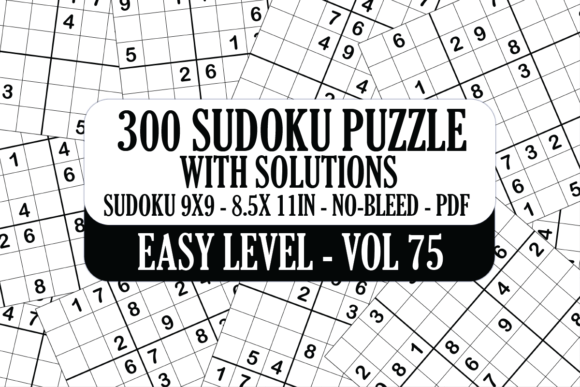
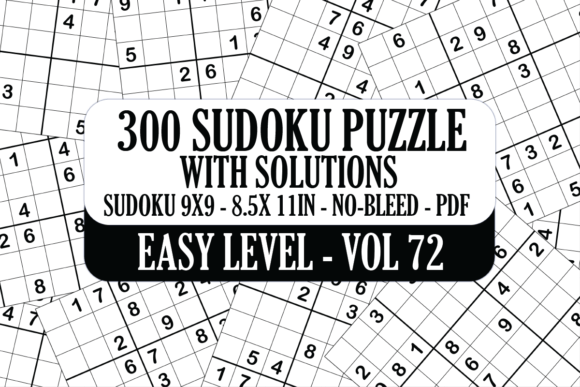
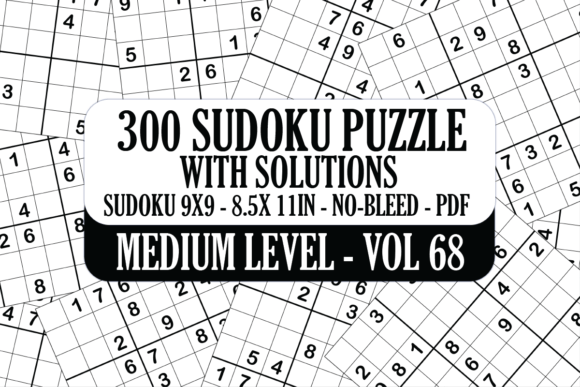
For those producing puzzle content, whether for print books, digital platforms, or downloadable resources like a 300 Sudoku Medium Puzzle with Solutions KDP Interior, the intermediate difficulty level represents the broadest market appeal. Beginners eventually graduate to wanting more challenge, while advanced solvers often appreciate medium puzzles as warm-up exercises or relaxing diversions between more demanding mental tasks.
The KDP publishing ecosystem has seen substantial growth in puzzle book offerings, and medium-level Sudoku collections consistently perform well. A well-designed interior file — clean, properly formatted, and thoughtfully laid out with 6 Sudoku per page and 12 Solutions per page — creates a professional product that readers appreciate. The standard 8.5×11 format with No Bleed specifications ensures that the puzzles print beautifully without content being trimmed away, making the solving experience seamless from page to page.
Creators investing time in developing Sudoku Medium puzzle collections understand that quality matters more than quantity alone. Each puzzle must be uniquely solvable, with a logical solution path that never requires guessing. The inclusion of comprehensive solutions formatted at twelve per page strikes an ideal balance between providing necessary reference material and conserving page count, making the final product both useful and economical.
Practical Applications Beyond Entertainment
The value of Sudoku Medium puzzles extends well beyond casual amusement. Educators incorporate these puzzles into mathematics curricula to develop logical reasoning skills without the intimidation factor that word problems sometimes carry. The non-verbal nature of Sudoku makes it accessible to students with diverse learning styles and language backgrounds, providing a universal tool for building critical thinking capacities.
In corporate wellness programs, medium-level Sudoku has found a place as a recommended activity for mental breaks. Unlike passive scrolling through social media, engaging with a Sudoku Medium puzzle provides genuine cognitive refreshment. Employees report feeling more mentally clear and focused after a brief puzzle session compared to other forms of break activities. This has led some forward-thinking organizations to include puzzle books in their wellness resource libraries.
Therapy settings have also embraced intermediate Sudoku puzzles as tools for cognitive rehabilitation. Patients recovering from certain neurological events benefit from the structured logical engagement that Sudoku Medium puzzles provide. The progressive nature of difficulty levels allows therapists to match challenges to patient capabilities, with the medium tier often serving as a milestone indicating significant recovery progress.
Designing Your Own Solving Strategy for Medium Puzzles
Developing a personal approach to intermediate Sudoku enhances both enjoyment and success rates. Experienced solvers often recommend beginning with a systematic scan of each digit from one through nine, marking obvious placements. With Sudoku Medium puzzles, this initial pass typically yields fewer complete results than with easy puzzles, which is precisely the point — it sets the stage for deeper analysis.
The next phase involves candidate notation. Some solvers prefer minimalist marking, noting only when a digit has exactly two possible positions within a row, column, or box. Others embrace fuller notation systems, tracking all possibilities for each cell. Neither approach is superior; the key is consistency and finding what works for individual cognitive styles. Sudoku Medium puzzles reward whichever notation method the solver employs diligently.
Advanced intermediate techniques worth mastering include the identification of locked candidates, where a digit within a box is confined to a single row or column, thus eliminating that digit from other cells in that row or column outside the box. Similarly, recognizing naked pairs — two cells within a unit that share exactly the same two candidates — allows the solver to eliminate those candidates from all other cells in that unit. These techniques appear frequently in Sudoku Medium puzzles and distinguish the competent solver from the novice.
The Craftsmanship Behind Quality Puzzle Collections
Not all Sudoku puzzles are created equal, and the difference between a satisfying solving experience and a frustrating one often comes down to the craftsmanship behind the puzzle generation. Quality Sudoku Medium puzzles exhibit logical flow, with each step building naturally upon previous deductions. Poorly generated puzzles may technically have unique solutions, but the path to reaching them might involve arbitrary leaps that feel unsatisfying.
Creators of puzzle collections — whether for personal enjoyment or commercial publication as a 300 Sudoku Medium Puzzle with Solutions KDP Interior — must pay careful attention to symmetry, clue placement, and the overall solving arc. The best medium puzzles maintain engagement throughout, avoiding extended periods where no progress seems possible while also not becoming so straightforward that the challenge evaporates. This balance reflects genuine puzzle design expertise.
When preparing a printable collection for platforms like KDP, technical considerations become paramount. The interior file must maintain consistent formatting across all pages, with puzzles clearly separated and numbered. Solutions formatted at 12 per page provide ample space for verification while keeping the overall page count manageable — in a typical 75-page book, this allows for 300 puzzles plus their corresponding solutions, creating substantial value for the purchaser. The No Bleed specification ensures that the 8.5×11 pages print correctly on standard home printers and through print-on-demand services alike.
Connecting Generations Through Shared Puzzle Experiences
One of the most endearing aspects of Sudoku Medium puzzles is their ability to bridge generational gaps. Grandparents and grandchildren can sit together, each working on puzzles suited to their skill level, sharing the common language of logical deduction. The medium tier often serves as a meeting point where younger enthusiasts developing their skills and older solvers maintaining their cognitive fitness find common ground.
Family puzzle nights have evolved beyond traditional board games to include parallel solving sessions where participants work through their preferred difficulty levels. A family member tackling a Sudoku Medium puzzle might ask for a hint from someone more experienced, creating organic teaching moments and intergenerational connection. These shared experiences build bonds while simultaneously exercising minds across age groups.
Integrating Sudoku Into Daily Routines for Lasting Benefit
Consistency matters more than intensity when it comes to cognitive training, and Sudoku Medium puzzles lend themselves perfectly to daily integration. Unlike harder puzzles that might require extended uninterrupted focus, medium-level challenges can often be completed in ten to twenty minutes — a manageable commitment that fits into morning coffee routines, lunch breaks, or evening wind-down periods.
The key to sustained engagement lies in having a ready supply of fresh puzzles. This is where comprehensive collections prove invaluable. A curated set of puzzles, whether accessed through a book, a printable PDF, or a dedicated app, eliminates the friction of searching for new challenges each day. The solver can simply turn the page and begin, maintaining momentum in their practice routine.
Tracking progress over time adds another layer of satisfaction. Many enthusiasts note their completion times, observing how their speed and accuracy improve with consistent practice. Some even develop personalized metrics, tracking not just how quickly they solve Sudoku Medium puzzles but also which techniques they employed, creating a rich record of their evolving skill set.
The Future of Medium-Level Puzzle Engagement
As technology continues to evolve, the fundamental appeal of Sudoku remains remarkably constant. Digital platforms offer convenience and features like automatic candidate notation and error highlighting, but many solvers maintain a preference for paper-based puzzles. There is something irreplaceable about the tactile experience of pencil on paper, the ability to make marginal notations, and the satisfaction of physically completing a grid.
The market for high-quality printable puzzle collections remains robust, with Sudoku Medium content consistently in demand. Publishers who invest in creating well-designed, thoroughly tested puzzle collections find receptive audiences eager for fresh challenges. The standard format of 6 Sudoku per page with solutions at 12 per page has proven itself as an optimal arrangement, providing clarity and usability that solvers appreciate.
Looking ahead, the intersection of traditional puzzle formats with modern distribution methods creates exciting possibilities. Printable puzzle collections formatted to professional specifications can reach global audiences through platforms like KDP, connecting creators with solvers across continents who share an appreciation for well-crafted Sudoku Medium challenges. The universal language of logical deduction transcends borders, making these puzzles a truly global medium for mental engagement and enjoyment.