100 Cute Animals Coloring Pages for Kids: A Strategic Asset for Smart Publishers and Educators
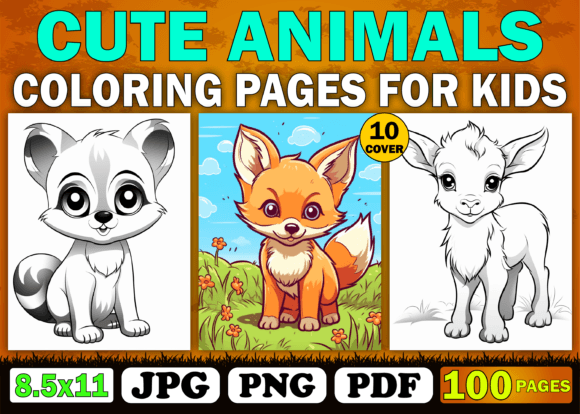
Every digital product you put into the world represents a decision—about who you serve, how you deliver value, and whether your asset can work as hard as you do. A ready-to-use collection of 100 Cute Animals Coloring Pages for Kids may look, at first glance, like just another graphic bundle. But when you examine it through a strategic lens, it becomes something more functional: a low-friction way to build a publishing catalog, test market demand, support learning goals, or create a recurring touchpoint with a specific audience. This particular bundle, which includes Volume 4 of the series alongside 10 colorful KDP-ready cover options, arrives with print-ready PDF, JPG, and PNG files at 300 DPI—sized for A4 and 8.5×11-inch paper. The technical readiness is the baseline. What you do with the resource determines whether it becomes a single-use download or a long-term lever for your business.
Understanding What the Bundle Actually Contains
Before planning, you need to be precise about the asset. Inside the .zip file you receive 100 line-art illustrations spanning familiar animals—cats, dogs, horses, elephants, deer, goats, sheep, cows—and imaginative characters such as mermaids, dinosaurs, and unicorns. Each design is delivered in three formats: a consolidated PDF for straightforward printing, and individual JPG and PNG files at 300 DPI. The inclusion of a separate PDF file that is print-ready reduces friction for creators who publish through Amazon KDP: you can upload the interior quickly, confident that margins and bleed are accounted for. The cover folder contains 10 pre-designed PNG book covers, giving you instant options to wrap the interior in a marketable face without commissioning additional graphics. The license restricts commercial use to the Kindle Direct Publishing platform, which is both a constraint and a clarifying signal—your decisions about distribution, pricing, and positioning become simpler because the playing field is defined.
Why This Asset Is Strategically Useful Across Different Contexts
A coloring book interior is not just a product; it is a content container. In the hands of a KDP publisher, it becomes a low-content book that can generate passive income. For an educator or homeschooling parent, the same pages become a flexible resource for fine motor practice, animal recognition, and quiet-time activities. For a blogger or email marketer, selected pages can serve as lead magnets, newsletter bonuses, or membership content. The strategic value lies in how you frame the asset to match a specific outcome. If your goal is to test a new niche on Amazon, the volume gives you enough variety to gauge which animals resonate—maybe you notice that unicorn and dinosaur pages consistently appear in the “Look Inside” preview, while farm animal pages drive more family-oriented reviews. That data can guide your next volume or an upsell. If your goal is to build an author brand, packaging the collection thoughtfully—with a cohesive cover story, a short introduction page, and a clear brand voice—starts to create recognition even in a crowded category.
Positioning “100 Cute Animals” for Different Audiences and Goals
Thoughtful positioning transforms a generic product into a targeted solution. Consider three use cases. 1. The teacher or therapist who needs reproducible, uncomplicated coloring sheets that won’t overwhelm early learners. Here, you might highlight the simplicity of the designs, the A4 fit, and the ready PDF that can be printed again and again—no internet required. 2. The parent looking for screen-free toddler entertainment on a road trip. The value proposition shifts to variety: 100 pages means fewer “I’m bored” moments, and the cute factor keeps engagement high. 3. The KDP publisher building a series. For this user, the strategic hook is speed-to-market and brand consistency. Using the provided covers as a starting point, they can launch Volume 4 alongside earlier volumes, create a bundled offer, or split the interior into themed mini-books (farm animals, sea creatures, mythical beings) to fill out a product line.
The key observation: the same 100 pages support radically different strategies. The asset only becomes “generic” if you refuse to tailor the wrapper—title, description, keywords, and overall presentation—to a specific person with a specific problem. That’s where planning meets execution.
Making Better Decisions Before You Publish or Distribute
A strategic approach begins with asking: What do I want this asset to achieve that my other resources don’t? If the answer is simply “another listing,” you risk diluting your efforts. Instead, consider these decision filters:
- Complement vs. Compete: Does the volume fill a gap in your existing Amazon catalog, or does it cannibalize a product that’s already performing? If you sell a unicorn-only coloring book, this bundle might become a loss leader or a freebie rather than a direct competitor.
- Seasonal Timing: Many cute animal pages (fish, mermaid, dinosaur) have Q4 appeal for stocking stuffers, but farm animals might perform better around spring. Plan your launch window accordingly.
- Format Hierarchy: The PDF is for print, but PNG files with transparent backgrounds let you extract individual elements for worksheets, social media teasers, or blog thumbnails. Decide early whether you’ll treat the asset as a fixed book or a flexible kit.
- Pricing Psychology: With 100 pages plus free covers, your cost per unit of content is extremely low. That gives you room to experiment—price competitively to gather reviews quickly, or price a premium bundle (e.g., multiple volumes together) that signals higher value.
Planning a Sustainable KDP Workflow Around the Collection
For those focused on Amazon KDP, the “ready to list” nature of this package is both a shortcut and a test. It’s a shortcut because you bypass the illustration and formatting stages. But it’s a test of your ability to differentiate. To avoid blending into a sea of identical interiors, layer your own expertise onto the finished file. Write an interior note that connects with the parent or teacher: a short “How to Use This Book” page that suggests conversation starters about each animal, or a challenge to color one page a day. Modify the metadata—even a small custom detail in the title or subtitle can separate your listing from others using the same base content. And if you are bundling Volume 4 with the previous three volumes to create a mega-collection, that in itself becomes a unique SKU that’s harder for competitors to duplicate quickly.
A practical planning tip: test the interior as a physical proof before scaling. Print a few pages at home using the 300 DPI JPGs on standard 8.5×11-inch paper. Check line thickness, how the designs feel in hand, and whether any intricate details might bleed or frustrate a young child. Then, if it meets your expectations, invest in a broader launch knowing the tactile experience is solid.
Using the Covers to Build Brand Recognition
The 10 colorful PNG cover files included free in this download are a strategic nudge. Instead of treating them as an afterthought, use them to establish a visual series. Consistency across your coloring book covers—similar font treatment, color palette, or layout—helps return customers spot your products instantly. If you already sell other low-content books, pick a cover style that aligns with your existing line. If this is your first title, treat the cover selection as your debut branding move. You can even A/B test two different covers by creating two identical interiors with varied covers under distinct ASINs, then double down on the one that drives more clicks and conversions. Small-scale testing like this turns a free design asset into a market research tool.
Practical Ways to Extend the Value Beyond a Single Product
Strategically minded creators rarely use a digital product in only one way. Here are several extension paths worth considering:
- Printable worksheet packs: Extract 10–15 pages, add simple phonics or counting exercises alongside each animal, and sell the resulting pack on platforms like Etsy or Teachers Pay Teachers—check license terms for non-KDP platforms; as noted, the commercial use here is limited to Amazon KDP, so verify or adapt accordingly for alternative outlets.
- Membership content: If you run a subscription site for parents or educators, drip a few new coloring pages each week as part of the “activity library.” The sustained release keeps engagement high and reduces content creation pressure.
- Lead magnets: A well-designed “Free 10-Page Cute Animals Sample” can grow an email list, especially when paired with a nurture sequence that eventually promotes the full 100-page printed book on Amazon.
- Bundled creativity kits: Physically printed pages combined with a set of crayons in a branded envelope become a thoughtful party favor, classroom gift, or a unique direct-mail piece for a children’s brand.
Each of these extensions answers a different strategic question: How can I meet the same audience at a different point in their day or buying cycle?
The Risk of Using the Asset Without Clear Goals
Despite its flexibility, downloading 100 Cute Animals Coloring Pages for Kids and uploading them to KDP without any contextual scaffolding is a risk. The main risk is perceived sameness. When a customer searches “cute animals coloring book” and sees multiple products with nearly identical interiors, they default to price comparisons or star ratings. Without differentiation—a stronger brand, a more thoughtful description, a better-structured series—you compete in a race to the bottom. Another risk is content fatigue: if your own catalog has multiple volumes that feel interchangeable, your repeat buyer may hesitate. The antidote is deliberate curation. Even if each book uses the same art style, assign each volume a sub-theme (“Woodland Friends,” “Under the Sea,” “Mythical Creatures”) and make that distinction clear in titles, covers, and categories. That way, you’re not just listing products; you’re building a catalog with logical next steps for the buyer.
When This Type of Coloring Bundle Makes the Most Sense
100 Cute Animals Coloring Pages for Kids is particularly effective in a few scenarios. It’s valuable when you are entering a proven market and need to move fast—you don’t want to spend three months commissioning artwork before you can test demand. It’s useful when you are diversifying an existing author brand and need a complementary product line that doesn’t require a steep learning curve. And it’s a strong choice for educators and therapists who need high-volume, low-prep resources where content quality is consistent and predictable. In each case, the asset is not the final answer; it’s a vehicle that lets you focus your creative energy on packaging, marketing, and relationship-building rather than on production logistics.
Long-Term Considerations for Publishers and Content Creators
If you decide to build with this collection, think about longevity. A single coloring book on Amazon has a lifespan shaped by reviews, keyword performance, and seasonal trends. But a strand of connected assets—multiple volumes, spin-off activity books, matching journals—can create a revenue stream that compounds. You might start with Volume 4, then use the insights gained (which animals get the most social shares? which page complexity brings complaints?) to commission original artwork for a proprietary Volume 5. Over time, the PLR-based interior becomes a stepping stone, not the destination.
Also consider the back-end opportunities. The same files that populate a paperback can be repurposed into a digital download version sold through your own storefront, provided you respect the license restrictions. A well-organized folder structure from the start—keeping the original ZIP, the separated formats, and any derivative works clearly labeled—saves hours later when you want to spin up a new product. Small operational habits like naming your files with descriptive keywords (e.g., “cute-tiger-coloring-page.jpg” instead of “image1.jpg”) also support better SEO if you ever use them on a website or in a product gallery.
Putting Intention Behind Every Page
100 Cute Animals Coloring Pages for Kids, especially when delivered in such a technically complete format, offers more than convenience. It offers a canvas for intentional decision-making. Whether you’re a publisher looking to expand a low-content book series, a marketer building an audience engagement tool, or an educator curating a reliable resource library, the value multiplies when you align the tool with a clear outcome. Don’t just release the book; release a viewpoint. Choose covers that tell a story. Write a description that understands a parent’s desire for quiet, creative time. Structure the pages so a child feels a small sense of accomplishment with each finished animal. When you make those decisions, you shift from simply using a pre-made interior to orchestrating an experience—and that distinction is what separates assets that gather digital dust from those that genuinely support your long-term goals.